Travel x Search Stickersheet
Developing modular assets for a growing travel ecosystem.

The Ask
A new tool set for a new team
Google consolidated its internal Travel and Local teams to create a more seamless user experience within the Google Search ecosystem. To support this integration, Huge was commissioned to develop a bespoke stickersheet and component library for the internal product teams.
Leveraging my expertise in design systems architecture, I served as the project lead for this initiative. Along with the client, we established the following criteria to measure the success and efficacy of the system:
- [family_history] The library needed to align itself with the bigger Search Design System as much as possible (variables and components), all this while maintaining the customizations done by the Google team.
- [arrows_input] Designs from multiple teams had to be centralized and organized clearly, and would be redesigned should they not align with the Search Design System.
- [bug_report] The components were in varying stages of testing. The file had to take this into account to make maintenance as simple as possible.
The Process
Three to synchronize
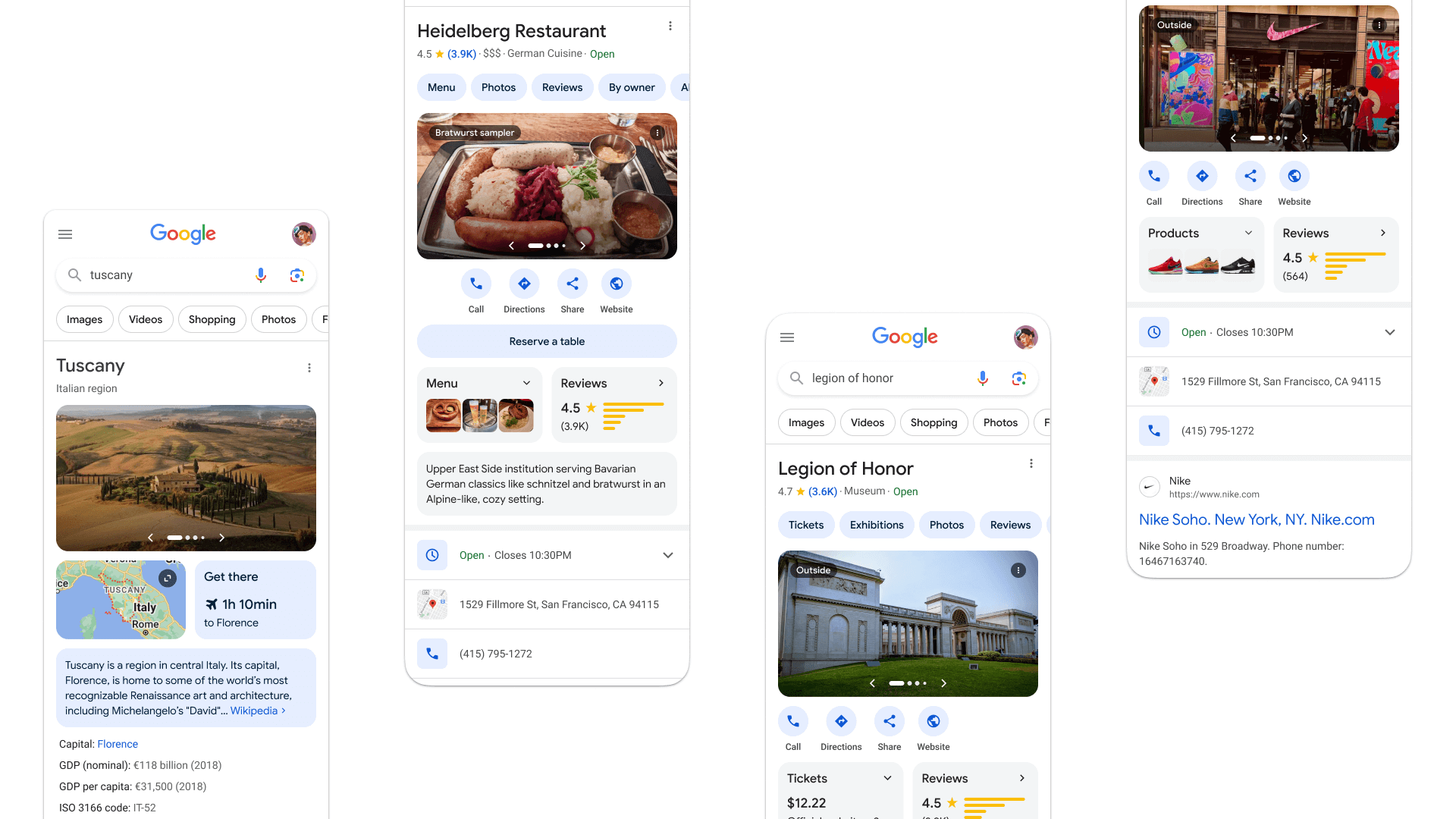
A comprehensive audit of the provided assets revealed two primary architectural challenges. Many existing components were either deprecated versions of the core Search Design System or contained non-standard custom elements that lacked system alignment. Additionally, the Travel team was required to inherit components and variables from the Google Maps design system, which created functional discrepancies within the Search environment. To build a unified and scalable stickersheet, we focused on three strategic objectives:
- [crowdsource] Align with the Search and Maps design system teams to analyze upcoming roadmaps and identify opportunities to standardize custom elements. This alignment ensured the new library minimized design debt while remaining intuitive for designers to navigate.
- [flip] Recreate all existing components and variables to establish full version parity with the core Search and Maps systems, eliminating inconsistencies caused by deprecated assets.
- [brush] Create the necessary custom components with a focus on modularity, ensuring they remain easy to swap or update if the primary design systems eventually adopt those specific features into their core libraries.
Results
Up-to-date, scalable, and easy to use
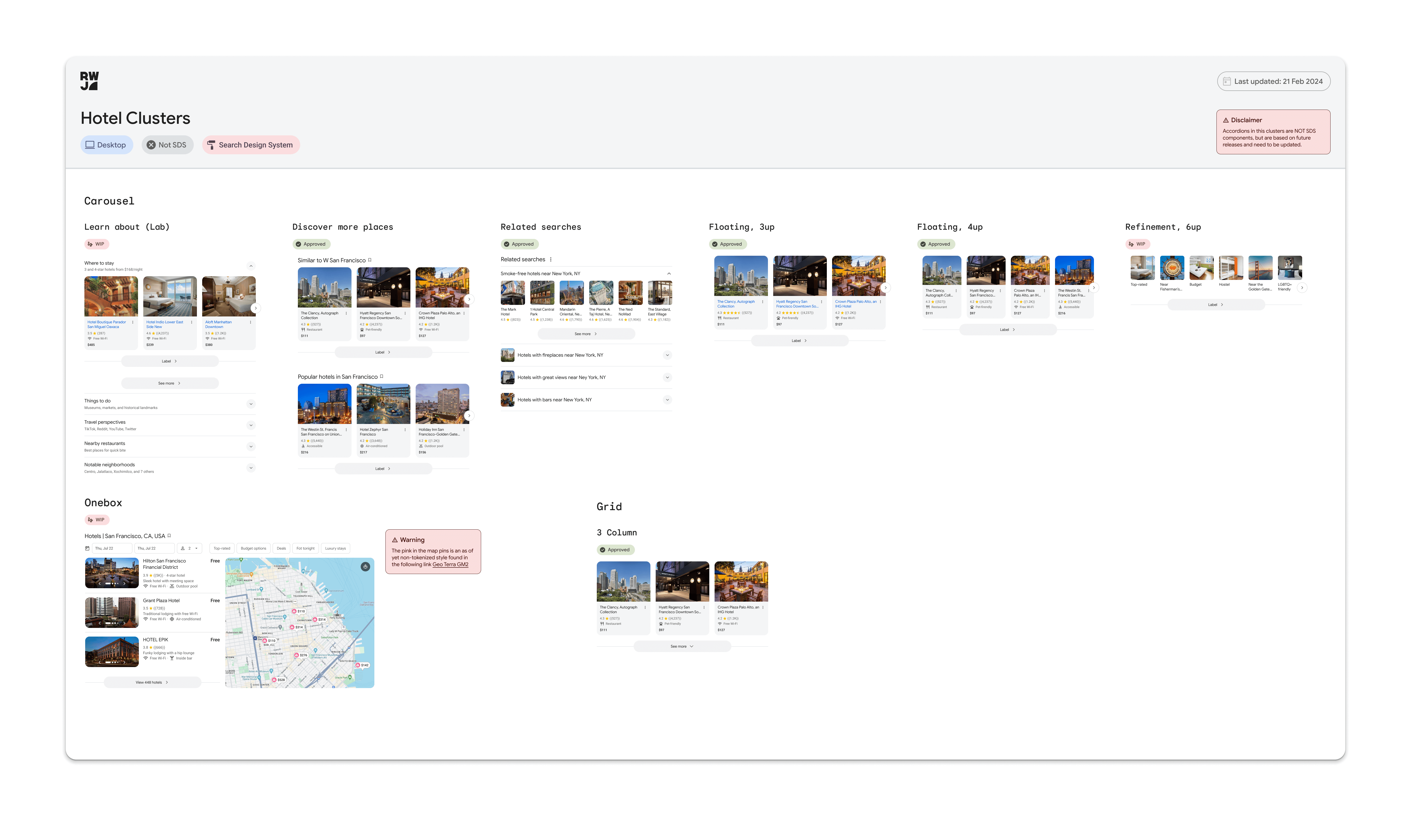
The final delivery included over 500 assets with only 12 custom components, a ratio that minimized design debt and simplified long-term maintenance. To streamline the design workflow, we implemented a status tracking system that provided clear visibility into whether a component was production-ready or in a testing phase. We also produced high-fidelity mockups that applied the latest search design patterns to the specific user flows found within the travel modules of the Search Results Page.